

About the Program
The Summer Research Internship 2026 at Jio Institute offers a research-driven, faculty-mentored experience for motivated undergraduate and postgraduate students. The program provides hands-on exposure to cutting-edge research across Artificial Intelligence, multimodal systems, materials science, semiconductor physics, marketing, and consumer behavior.
Interns will work closely with faculty supervisors on defined research themes, contribute to ongoing projects, and develop strong analytical, technical, and research skills in a structured academic environment.
Program Information
Duration
Research internship tenure
Application Announcement
Applications officially open
Application Deadline
Last date to apply
Internship Start Date
Program commencement
Stipend
Financial support (if applicable)
Faculty Supervisors


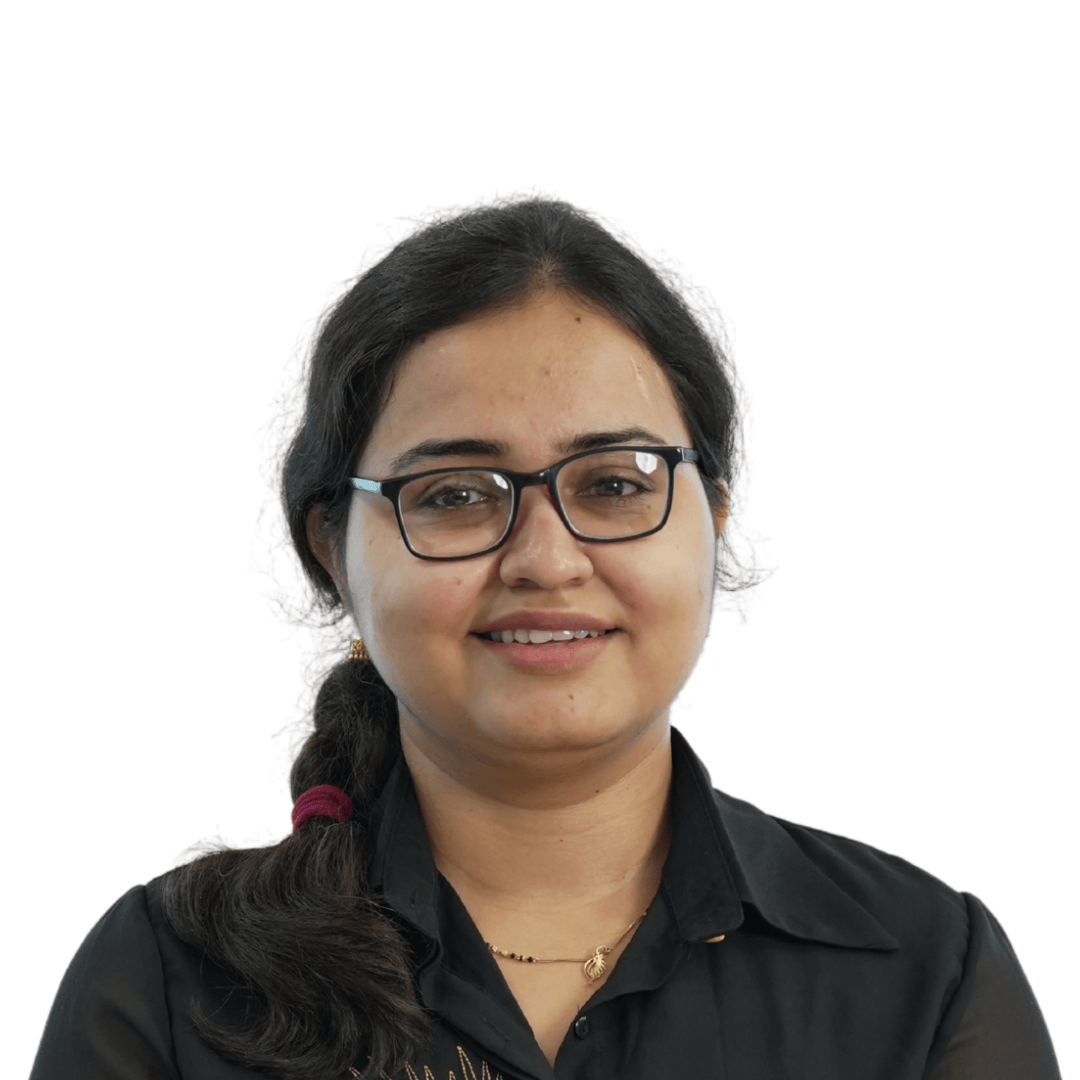

Dr. Sudipta Roy
Topics
Self-Aware and Self-Reflective Neural Networks
Design neural architectures capable of estimating their own uncertainty, confidence, and failure modes, enabling safer deployment in real-world systems such as healthcare and autonomous systems.
Multimodal Scientific AI Models
Develop large multimodal models that integrate medical images, text, clinical reports, and tabular data to support scientific discovery and medical decision-making.
Self-Supervised Learning for Rare and Unknown Diseases
Design self-supervised learning approaches capable of discovering unknown patterns or rare conditions in medical imaging datasets without labeled data.
AI for Small Data and Data-Efficient Learning
Develop algorithms that can learn effectively from very small datasets, a critical challenge in healthcare and scientific domains.
Responsible and Ethical AI Systems
Develop AI models that are fair, interpretable, privacy-preserving, and robust, especially in sensitive domains such as healthcare.
Real-World Robust AI
Develop models that remain reliable under distribution shifts, noise, and real-world data variability.
Foundation Models for Medical Imaging
Develop large-scale medical foundation models trained on diverse imaging modalities (MRI, CT, ultrasound, X-ray) to enable generalizable medical AI systems.
Eligibility & Requirements
Undergraduate: Students currently in their 3rd or 4th year of B.Sc. / B.Tech. / B.E. (or equivalent).
Postgraduate: Students currently in their 2nd year of M.Sc. / M.Tech. (or equivalent).
Required Knowledge: Basic statistical mechanics and classical mechanics
Required Skills:
- Prior experience in Deep Learning, Computer Vision or work involving LLMs/VLMs is desired.
- Familiarity with DL frameworks such as PyTorch or TensorFlow is mandatory.
- Ability to write clean, modular, and scalable code.
- Prior experience in Python is mandatory.
Dr. Samik Mukherjee
Topics
Advanced Characterization of Materials for Optoelectronic and Nanoelectronic Applications
This project focuses on understanding semiconductor materials and nanostructures used in modern optoelectronic and nanoelectronic devices through advanced characterization techniques. Students from any background, with an interest in semiconductor materials and device physics are encouraged to apply.
During the internship, participants will learn how nanoscale structure, defects, and interfaces influence electronic and optical properties and device performance. The experience provides a strong foundation for students considering graduate studies or research careers in semiconductor physics, nanoelectronics, photonics, and advanced materials.
Synthesis of Perovskites, Modeling, and Device Optimization
This project explores the synthesis of perovskite materials and the modeling and optimization of devices based on them for next-generation energy applications. Students from any background, with an interest in semiconductor materials and device physics are encouraged to apply.
Interns will learn how material composition and processing influence electronic properties and device performance, and will gain exposure to both experimental materials development and device-level analysis. This experience will be particularly valuable for students planning further studies or research in optoelectronics, energy materials, semiconductor devices, and nanotechnology.
Eligibility & Requirements
Undergraduate: Students currently in their 3rd or 4th year of B.Sc. / B.Tech. / B.E. (or equivalent).
Postgraduate: Students currently in their 2nd year of M.Sc. / M.Tech. (or equivalent).
Required Knowledge: Basic knowledge of solid-state physics, semiconductor physics, or materials science. Familiarity with concepts such as crystal structures, electronic band structure, and basic device physics will be helpful.
Required Skills:
- Basic programming skills in Python or MATLAB for data analysis and simple modeling are desirable but not mandatory.
- Interest in semiconductor materials, nanoelectronics, optoelectronic devices, or advanced materials characterization.
- Familiarity with basic laboratory techniques, experimental data analysis, or numerical modeling will be an advantage.
- Ability to work independently, analyze experimental or simulation results, and communicate findings clearly in written and oral form.
Dr. Mohna Chakraborty
Topics
Reasoning and Scientific Discovery with LLMs/VLMs
This research theme explores how Large Language Models (LLMs) and Vision-Language Models (VLMs) can assist in complex reasoning and accelerate scientific discovery. Participants will investigate methods that enable AI systems to perform structured reasoning, generate hypotheses, analyze scientific literature, and assist in research workflows.
The focus is on developing AI systems that can support knowledge discovery across domains such as healthcare, materials science, and computational research.
Human-Aligned and Ethical AI
This research theme focuses on developing AI systems that are transparent, responsible, and aligned with societal expectations. Participants will explore topics such as value alignment, fairness in AI systems, bias mitigation, governance frameworks, and responsible deployment of AI technologies in real-world settings.
Efficient Training and Next-Generation LLMs/VLMs
This research theme investigates methods to develop more efficient training strategies for large-scale language and vision-language models. Participants will explore innovations in model architecture, optimization techniques, parameter-efficient learning, and distributed training methods aimed at building next-generation AI systems that are both scalable and computationally efficient.
Grounded Intelligence for LLMs/VLMs
This research theme focuses on developing AI systems that integrate language and vision understanding with real-world knowledge and interaction. Participants will explore approaches such as multimodal learning, environment-aware AI systems, and integration with external knowledge sources to create models that can reason about and interact with the physical and digital world more effectively.
Eligibility & Requirements
Undergraduate: Currently in the 3rd or 4th year of B.Tech. / B.E. / B.Sc. (or equivalent).
Postgraduate: Currently in the 2nd year of M.Tech. / M.Sc. (or equivalent).
Required Skills:
- A strong foundation in Mathematics / Statistics / Computer Science.
- High proficiency in programming, particularly in Python.
- Prior experience in NLP, Deep Learning, or work involving LLMs/VLMs is mandatory.
- Familiarity with DL frameworks such as PyTorch or TensorFlow is mandatory.
- Ability to write clean, modular, and scalable code.
Dr. Vishnu Prasad
Topics
Brands in Large Language Models – Measuring and Improving How Brands Are Represented in LLMs for Personalization and GenAI Marketing
This research theme investigates how brands are represented, interpreted, and generated within large language models (LLMs). As generative AI increasingly shapes consumer information and brand discovery, understanding these representations becomes crucial for marketing strategy.
Participants will explore methods to measure brand visibility, sentiment, and positioning in LLM-generated content, as well as techniques to improve brand representation for personalization, recommendation systems, and generative AI–driven marketing applications.
Human–AI Opinion Dynamics – Studying Belief/Lexical Shifts from Sustained LLM Interaction on Marketing-Relevant or Contentious Topics
This research theme examines how sustained interactions with AI systems influence human beliefs, opinions, and language patterns over time. In marketing and consumer research contexts, AI-powered conversational agents increasingly shape how individuals perceive products, brands, and social issues.
Participants will study shifts in opinions, lexical choices, and decision-making behaviors resulting from repeated human–AI interactions, with particular attention to marketing-relevant topics and complex or contentious issues.
Metaverse – Dynamic World Models – Understanding Drivers of Engagement in Dynamic Metaverse-Based Retail/Service Contexts
As immersive digital environments evolve, the metaverse presents new opportunities for consumer engagement, retail experiences, and service innovation. This research theme focuses on understanding how dynamic virtual environments influence user behavior, brand engagement, and purchasing decisions.
Participants will explore models of consumer interaction within metaverse ecosystems, investigating factors such as digital identity, immersive experiences, and behavioral drivers in virtual retail and service platforms.
Agentic AI in Consumer Purchase Decisions – Examining How Autonomous AI Tools Shape Inclusive and Sustainable Purchase Decisions
The emergence of agentic AI, autonomous AI systems capable of planning and executing complex tasks, has significant implications for consumer decision-making. This research theme explores how AI agents can influence purchasing behavior, product discovery, and decision processes in digital marketplaces.
Participants will examine the role of AI-driven assistants in shaping inclusive and sustainable consumption patterns, as well as the broader implications of autonomous decision-support systems in modern commerce.
Eligibility & Requirements
Undergraduate: 3rd/4th year B.Tech./B.E./B.Sc. (or equivalent)
Postgraduate: 2nd year M.Tech./M.Sc./MBA (or equivalent)
Academics: Strong record (preferably top 20% or CGPA ≥ 7.5/10 or equivalent).
Skills: Python is needed but students open to learn are also invited.
Plus: Exposure to consumer behavior/marketing, AI/digital tech, or ML basics (not mandatory).
Commitment: Full-time during the internship; strong motivation for interdisciplinary research at the intersection of AI, marketing, and consumer psychology.
Application & Selection Process
Application Process
Interested Applicants shall send a Synopsis / Statement on the Topic of Research and their CV by email to the dedicated email ID.
The email ID is being created and will be shared once active.