
Reimagining Education 4.0 with AI

The fate of every civilization is tied to the quality, scalability, efficiency, and efficacy of its Education system. Throughout the history of human civilization, the contemporary educationists have been exploring answers to the fundamental questions like Why should our students learn? What should they learn? and How should they learn? The answers are very contextual to those
times. In this article, we revisit the how question. In particular, we explore what needs to change in our current education system?, what should a post-digital, post-AI education system look like?, how will AI bring about such a disruption? How do we resurrect the original dream of building a Teaching Machine with the advent of modern AI and the New Education Policy.
Evolution of Education Systems
Education 1.0 practiced during the golden period of the Indian civilization involved students living in ‘Gurukuls’ of the great ‘Gurus’ of their times and receiving holistic, high quality, and very personalized education. The only drawback was that such education could not scale to the masses and was restricted to the privileged few.
Education 2.0 practiced since the industrial revolution up until now was designed to ‘mass produce skilled labourers’ for the factories. In its current incarnation, the modern school system is a one-size-fits-all education system where each student, depending on its ‘board’, goes through the same curriculum, using the same content, and doing the same homework. This system of education is dependent on quantity and quality of teachers to achieve scale but at a very high cost of quality of education and level of personalized attention each student receives.
Education 3.0 was ushered in by the Massive Open Online Courses (MOOCs) that made high quality content easily available to everyone with an Internet connection and a device to consume the content. This really democratized educational content and broke the barriers of who can learn from whom. It fundamentally re-defined what a classroom is. The best teachers in any subject are now able to teach (at least provide content to) millions of students across the planet. It has addressed the “quality at scale” problem but still the content is the same for all.
Education 4.0, the subject of this article, is the next evolution of a “digital-physical” school that is now possible with the convergence of great technologies such as cloud, connectivity, compute, devices, and most importantly Artificial Intelligence, and the New Education Policy.
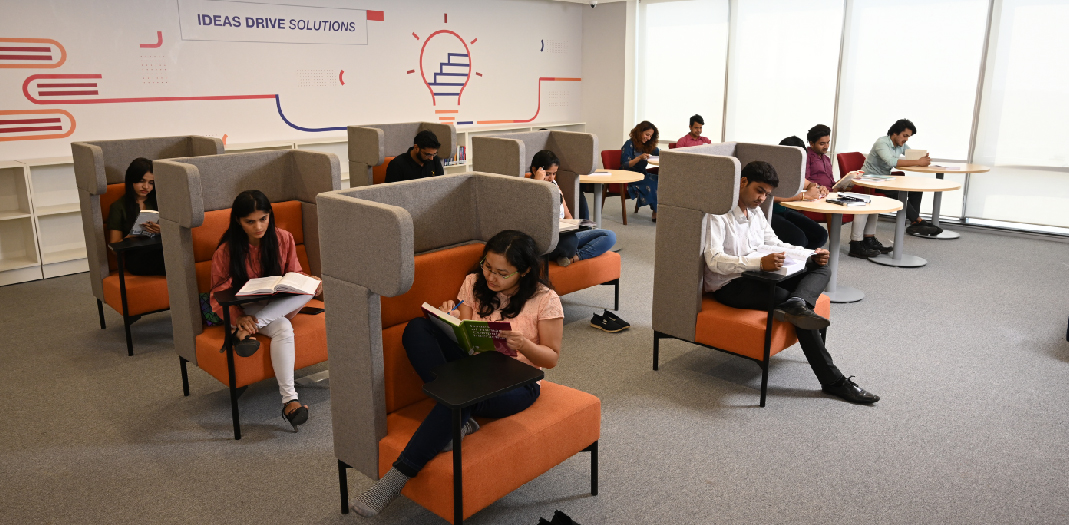
Why Education Needs Disruption?
“The average student tutored one-to-one using mastery learning techniques performed two standard deviations better than students who learn via conventional instructional methods.”
– Benjamin Bloom, 2 sigma problem
There are two broad themes that Education 4.0 must address using AI:
• First, bring personalization-at-scale to Education as AI has done to retail, media, ads, etc.
• Second, remove burden-of-chores for teachers so they can focus on teaching effectively.
(a) Personalization-at-Scale: Education is a very personal journey grounded in the core principle of Mastery Learning – i.e. a student must master a concept before moving to next (especially dependent) concept. This requires a student centric education system. Unfortunately, the modern education system is everything else but student centric. It is (i) curriculum centric, i.e. the primary focus is to “finish the syllabus” at a certain pace, without any regard to whether or not every student is able to keep up with it, (ii) grade level centric i.e. the level at which the concepts are taught is commensurate with the grade level, without regard to the true mastery level of the student who might have reached this grade by getting merely passing marks so far, (iii) class centric i.e. each student in the class is taught a concept in the same way, without regard to the diversity of students in the class in their proficiency levels and learning styles, and (iv) content centric i.e. it is taught with a particular static, physical text book in mind with content that might not suit all students given the diversity of their learning styles. All this makes the one-size-fits-all modern education system highly inefficient, stressful, poor quality, and not equally effective for all. Addressing this crisis of modern education is the first goal of Education
4.0.
(b) Freeing Teachers from ‘Chores’ of Education: Today, a teacher is burdened by a number of tasks that are necessary but not core to education. For example, generating pre-reads, generating homework, grading homework, generating assessment, grading assessment, and planning for next class, etc. are tasks that can easily be done by AI, leaving the teacher to do what she is best at – teaching the core content, answering specific individual doubts, focussing on weak spots of individual students, etc.
Education 4.0 – Personalization at Scale
“A one-size-fits-all lecture is not the way to go about education.” – Sal Khan
The next generation education system will usher in the true promise of AI, i.e. “Personalization at Scale”, for every student. It will be a hybrid
digital-physical system of education where the digital part will cater to curriculum, content, homework, and section personalization while the physical part will cater to labs, sports, drama, music, hackathons, group projects, etc. developing social and team working skills in students.
The digital part of the digital-physical education 4.0 will personalize the following for each student:
(a) Curriculum Personalization – addresses the question: “What does the student want to learn next?” for each student, every day, for every subject, given his/her precise current “state-of-learning-proficiency” in the subject. It therefore creates a unique learning path for each student on what s/he already knows and whats/he needs to catch up on. In this system, “there are no grade levels!”. Instead of coarsely bucketing students by grade levels by age, the AI powered curriculum personalization maintains a fine-grained learning-state of each student in each subject and recommends the precise concept to master next in each subject.
(b) Content Personalization – addresses the question: “which is the best content for the student to learn from?”, per student, per concept s/he is supposed to master next. Instead of using the “standard text-book” – a pre-digital notion of content, the AI powered system will either discover (from the plethora of content available on-line or in private libraries) or generate (using the full power of generative AI
(c) Homework/Practice Personalization – addresses the question – “what homework or practice problem set is more efficient?” per student, per concept. Instead of a single homework for all students in a class, AI can generate a different homework for each student, adapting the complexity of problems depending on s/he has answered the previous problems. At the same time AI will update the student learning state depending on the steps, associated with specific concepts, the students struggled with (i.e. taking longer, asking for hint, making mistakes, etc.)
(d)Section Personalization – addresses the question – “which group of students should be clubbed together to teach a specific concept in the class?”. Instead of creating static sections for each grade in the school, AI will be able to “group similar students together” based on their learning-state and do adaptive sectioning, addressing the biggest issue in a classroom teaching – student diversity. This way, each section will be taught precisely what they need to and are ready to learn.
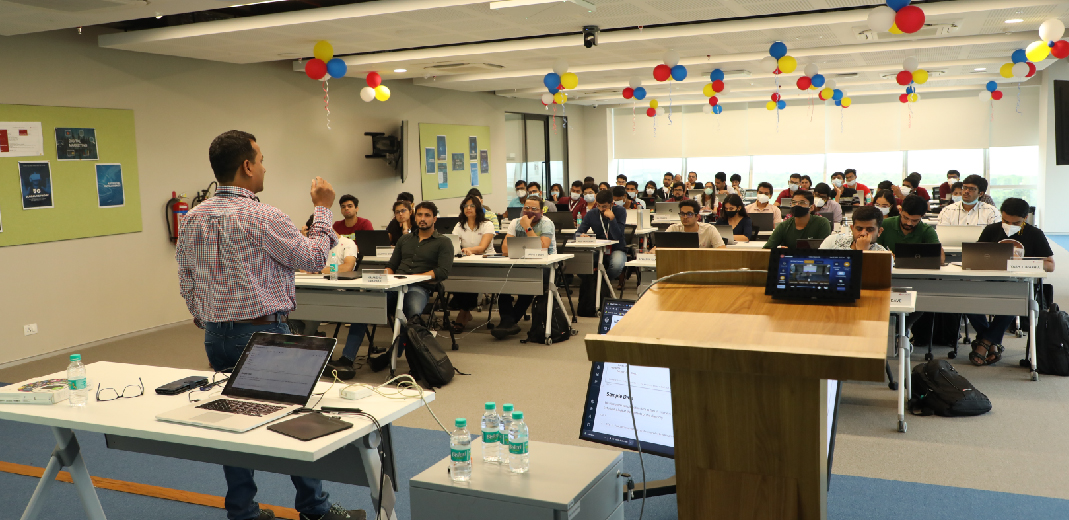
And once we could build a machine that thinks, surely we could build machines to teach humans how to think and how to learn.”
- Audrey Watters (The Algorithmic Future of Education)
The last two decades of AI was more commercially oriented and has really transformed Search, Retail, Media, Advertising, and to some extent Manufacturing. The next two decades of AI will transform the social sector including
healthcare, education, agriculture, smart cities, and smart mobility. In this article, we presented how education is poised for disruption of the one-size-fits-all education system using AI that will bring personalization-at-scale. With the New Education Policy and the advancement of AI, we are poised to see the emergence of a hybrid education system that complements digital education with physical education seamlessly increasing the quality, availability, efficiency, and efficacy of education for all.